Cost of Living in Tanzania for Long-Stay Visitors
Thinking about spending a few weeks or even several months in Tanzania? One of the first questions you will probably ask is: How much does it cost to live in Tanzania?
For long-stay visitors, Tanzania can offer a comfortable lifestyle at a reasonable cost, particularly when you live more like a resident than a short-term tourist. Your actual expenses will depend on where you stay, the type of accommodation you choose, how often you eat out, and how much you travel.
For visitors planning a winter escape around Arusha and northern Tanzania, here is what to expect.
Accommodation: Your Biggest Monthly Expense
Accommodation will usually take the largest share of your budget.
The good news is that long-stay visitors have more options than ordinary tourists. Instead of paying hotel rates every night, you can choose guesthouses, furnished apartments, private rooms, or properties specifically designed for longer stays.
Hotel prices in Arusha vary considerably by comfort and season. Current travel-cost data shows budget accommodation can start around US$20–35 per night, while comfortable hotels and higher-end properties can cost considerably more.
For stays of four weeks or longer, it is worth asking about monthly or long-stay rates. These can make a significant difference compared with booking individual nights.
Food and Groceries
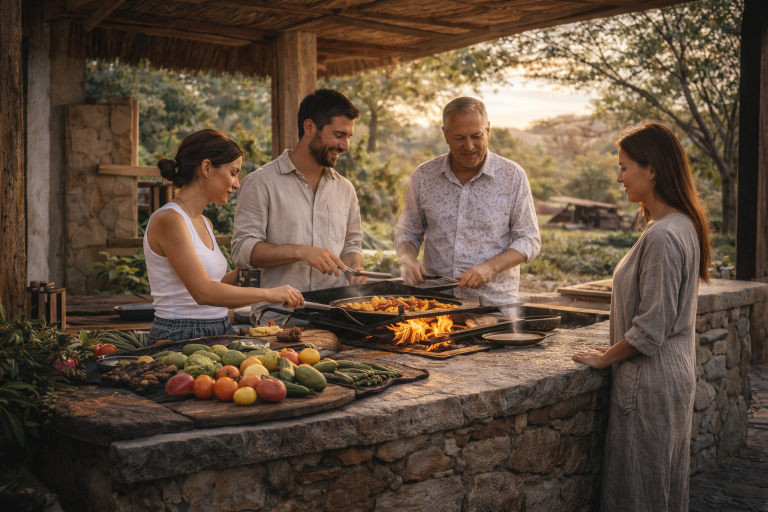
Food can be surprisingly affordable when you combine home cooking with eating at local restaurants.
Fresh vegetables, fruit, rice, eggs, bread and other everyday products are widely available. Recent Arusha price data, for example, lists a basic restaurant meal at around TZS 9,000, while common groceries such as a loaf of bread are around TZS 1,750, a dozen eggs around TZS 4,500, and a kilogram of tomatoes around TZS 2,000. Prices naturally vary between shops and markets.
Local-style restaurants are generally much cheaper than international restaurants or restaurants primarily catering to tourists. Across Tanzania, a meal at a simple local restaurant can often cost around US$3–5.
Shopping locally and cooking some of your meals is therefore one of the easiest ways to keep your monthly expenses under control.
Getting Around
Transportation costs depend heavily on your lifestyle.
Local public transport is inexpensive, while taxis and private transfers provide greater comfort at a higher price. In Arusha, recent cost-of-living data puts a one-way local transport fare at around TZS 500, although visitors may frequently choose taxis or arranged transportation instead.
If you are staying for several weeks, choosing accommodation close to the places you regularly visit can significantly reduce transportation costs.
Internet and Staying Connected
Staying connected in Tanzania is relatively straightforward. Mobile internet is widely used, and local SIM cards and data packages can be convenient for long-stay visitors.
If you plan to work remotely, check whether your accommodation includes reliable Wi-Fi before booking. Having both Wi-Fi and mobile data as a backup can make remote working much easier.
For digital nomads and remote workers, internet access should therefore be considered part of the monthly budget rather than an occasional travel expense.
Eating Local vs. Living Like a Tourist
This is where the cost of a long stay can change dramatically.
Someone staying in hotels, eating at international restaurants every day, taking private taxis and booking activities frequently can spend significantly more than someone renting long-term accommodation, shopping locally and exploring at a slower pace.
For comparison, ordinary tourist spending across Tanzania averages around US$109 per person per day, including accommodation, food, local transportation and sightseeing. Arusha tourist spending can be higher depending on accommodation and activities.
However, these are tourism budgets rather than long-term living budgets. Staying in one place for several weeks can reduce costs because you are not constantly paying for hotels, transfers and sightseeing.
Safaris and Activities Are Separate
One important thing to remember when planning your Tanzania winter escape is that everyday living expenses and safari expenses are very different.
Your normal weeks might involve relaxing, working remotely, exploring Arusha, visiting markets and enjoying local life.
Then you might choose to add a safari, Zanzibar trip, hiking experience or cultural excursion.
Safaris can add significantly to your overall budget. Depending on comfort level and itinerary, safari costs can range from roughly US$150 to US$800+ per person per day.
It is therefore useful to create two budgets: one for everyday living and another for special trips and experiences.
How to Keep Your Long Stay Affordable
Living comfortably in Tanzania does not necessarily require a luxury budget. Small decisions can make a major difference.
Choose accommodation with long-stay rates and kitchen facilities. Buy fresh produce from local shops and markets. Mix restaurant meals with home cooking. Use local transportation when practical, and plan major activities rather than booking something expensive every day.
Most importantly, travel slowly.
The longer you stay in one place, the easier it becomes to establish a routine and move away from typical tourist spending.
A Different Kind of Winter
Spending several weeks in Tanzania is not simply about finding somewhere cheaper to stay.
It is about exchanging cold winter mornings for warmer days, discovering a different culture, enjoying more time outdoors and experiencing Tanzania without rushing from one attraction to another.
Your budget can be simple or luxurious depending on the lifestyle you choose. But for long-stay visitors who are comfortable living locally and travelling slowly, Tanzania offers the opportunity to create a memorable winter experience without treating every day like an expensive holiday.
Stay longer. Live slower. Experience more of Tanzania.